
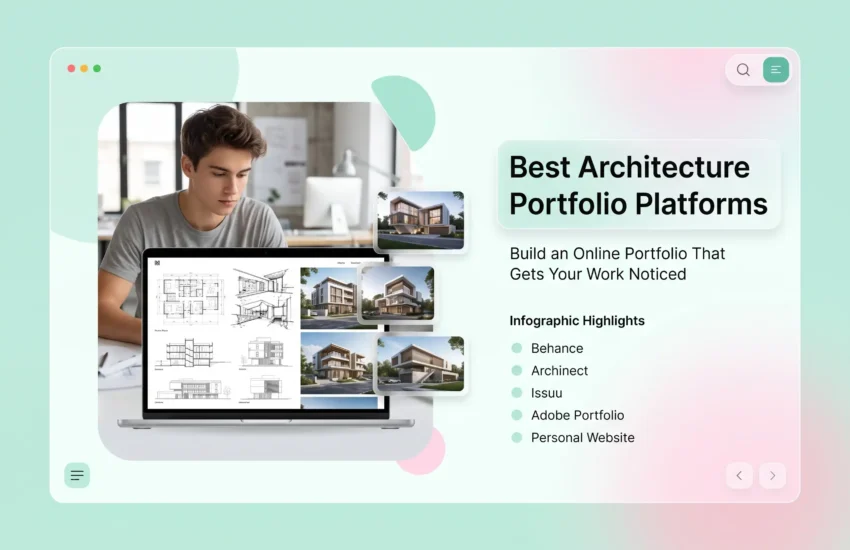
For Architectural students and professionals, architecture portfolios are not just drawings and renders; it showcases the design and creativity of the individual. With an increasing digitization in architecture recruitment, it has become easier for recruiters, clients, firms, and educational institutions to know about your work through an online architecture portfolio.
There are many online architecture portfolio websites that exist at present. The selection of the right website can be tough. In this regard, Vastulaya discusses some of the best architecture portfolio platforms and how students and graduates should develop their architecture portfolio websites.
Why Is An Online Architecture Portfolio Important?
An architecture portfolio lets you display carefully selected projects from academia, profession, competitions, and even personal projects. While a physical portfolio is static and limited in its ability to showcase all projects that one might want to show off, an online portfolio can easily be changed depending on your evolving portfolio.
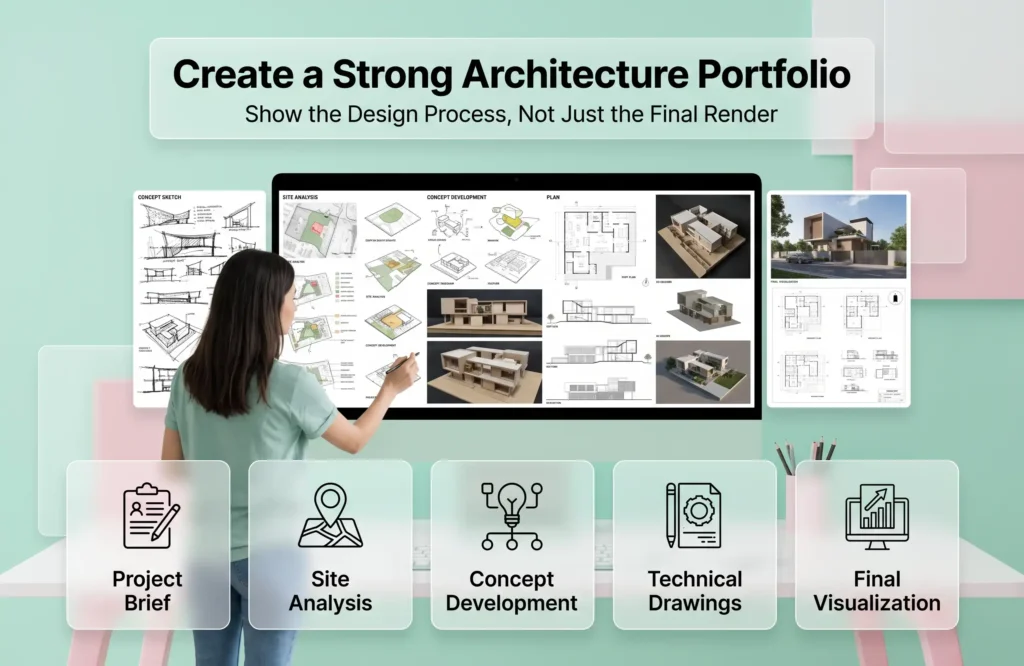
An architecture portfolio for students will reflect their academic works, studio works, sketches, conceptual developments, site analyses, drawings, physical models, and digital visualization of ideas.
The architecture portfolio for graduates will reflect both the academic and internship and professional work that a graduate has done. It can also include works such as projects, competitions, research, and publication, among others.
The online architecture portfolio presents one more advantage to its users, that is, it is accessible from anywhere. The large files are not required to be sent multiple times, rather a portfolio link suffices.
According to Vastulaya, the online portfolio should be treated as an extension of the CV of the architect rather than just putting all the projects you have completed. Additionally, the quality, organisation, clarity, and project selection are more important than the number of pages or images.
Best Architecture Portfolio Platforms
The best platform should depend on whether you are more concerned with networking, portfolio display, personal branding, or full control over your website.
1.Behance – Behance is an online platform that is commonly used by creative professionals such as architects, graphic designers, photographers, and illustrators. You can create an individual page for each of your projects and show drawings, renders, photos, diagrams, and descriptions.
For an architecture portfolio for students, Behance will be helpful in presenting selected architectural projects and creating your online creative identity. The existing creative community will give you chances of finding other designers and projects.
2. Archinect – Archinect is an architecture-oriented platform that provides professional portfolios, project information, job opportunities, and architecture-related resources.
It can be especially beneficial for architecture graduates since the platform is connected to the architecture profession. A thorough portfolio along with a profile can help them represent their education and experience to the relevant audience.
3. Issuu – Issuu can be useful when publishing digital portfolios, such as PDF files. If the students already have an architectural portfolio created in Adobe InDesign or other similar software, they may publish it by uploading the file online.
This service will be especially helpful for those who want to make a page-by-page architecture portfolio but still want it to be available via the internet link.
4. Adobe Portfolio – Adobe Portfolio allows for creating personalized websites for portfolios and can be useful for those who regularly use Adobe Creative Cloud services.
This platform gives more freedom of website customization than some of the social portfolios, and students will be able to organize the projects on the separate pages and create an architecture portfolio website of professional appearance without needing extensive web-development knowledge.
5. A Personal Architecture Portfolio Website – Personal website allows full control over the branding, navigation, content, and domain. This option may be especially useful for those graduates who plan to build their long-term career as architects.
Nevertheless, having your own website means having to maintain it. Therefore, your website must be simple, fast, and easily navigable rather than packed with animations and other complicated features.

How to Create an Architecture Portfolio
Getting familiar and understanding of how to create an architectural portfolio starts with understanding its purpose. The portfolio created for an internship application may not necessarily require the same materials that will be needed to make a portfolio for a postgraduate course or a job.
Begin by selecting your best projects. Do not add all of your projects in order to make your portfolio longer; select projects that highlight different skills and reflect how your design thinking has evolved.
Some important elements that you could include in a good digital architecture portfolio are:
- Project title, location, and year
- Design brief and objectives
- Site analysis
- Concept development
- Sketches and diagrams
- Plans, sections, and elevations
- Physical and digital models
- 3D visualisations and renders
- Technical drawings and details
- Short description of the design process
It is important that the design of the portfolio is consistent. The font should be readable, there should be proper hierarchy of the information, images and text size should be appropriate as well as the space.
What Makes the Best Architecture Portfolio Websites Effective?
When making architecture portfolio sites, one needs to concentrate more on communication than on excessive visuals. The viewer needs to be able to understand who you are, what do you do, and what kind of architecture you produce, without having to struggle with the complex navigation system.
The choice of projects is also very important. Instead of many unfinished projects, it is better to have fewer projects done properly and described in detail.
At Vastulaya, we suggest that every project should have its story. Describe the problem, your approach to solving the problem, the whole process of developing it, and the result. In this way the viewers will be able to understand your architect’s thinking, not just admire your nice renders.
Your architecture portfolio website should also work effectively across all devices including mobile, desktop, and laptop. Clear navigation, optimised images, readable text, and logical project categories can significantly improve the viewing experience.
Tips for Building a Professional Architecture Portfolio
When preparing a digital architecture portfolio, remember to consider the audience. If you are applying to work with an architectural company, study the work of the company and include the projects which show that you have appropriate competencies.
Try to find the right balance between images and explanation. Architecture is a very visual discipline, but images become more understandable due to concise explanations.
You should also update your portfolio from time to time. Whenever you acquire new experience through internships or competition entries, or do professional work, change the weakest part of the portfolio with better projects.
Vastulaya encourages architecture students and graduates to consider their portfolios as professional documents.
Common Mistakes BIM Freshers Should Avoid
Having the right portfolio site can enhance your online visibility and help you share your projects with others. Even though sites like Behance, Archinect, Issuu, and Adobe Portfolio have their own strengths, having your personal website provides you with better branding and control options.
Regardless of the platform that you use, remember that a good architecture portfolio involves strong projects, design processes, coherent presentation, and navigation.
According to Vastulaya, architecture students and professionals require creating a very special portfolio. In his opinion, an effective portfolio is all about the process of design rather than the final product.
Conclusion
Getting your foot in the door to become a BIM professional even if you lack experience is not simply a matter of someone offering you an opportunity; it involves gaining the necessary software skills, experience, and portfolio to make the “lack of experience” argument fall flat on its face.
Freshers who have adopted the right approach and follow it from Revit training all the way to actual interview questions have proven to get their entry into the ranks of BIM modelers and BIM engineers quicker than those depending solely on certification.
Questions People Frequently Ask
-
What is the best platform for an architecture portfolio?
The best platform depends on your intentions; Behance, Archinect, Issuu, Adobe Portfolio, and personal sites are good options to consider for their various advantages.
-
Should architecture students create an online portfolio?
Yes, an online portfolio is recommended as it helps in sharing the student's academic and creative work with architectural firms, recruiters, institutions, and connections.
-
How many projects should an architecture portfolio have?
There is no certain number, but it is more important to highlight a few relevant and great projects rather than including all of them.
-
What should an architecture portfolio include?
The list includes sketches, concepts, diagrams, plans, sections, models, renders, drawings, and descriptions of the design process.
-
Is a PDF enough for an architecture portfolio?
While PDF continues to remain effective for the application process, online portfolios serve as a readily accessible addition.
-
How can I make my architecture portfolio stand out?
The key is project selection, storytelling, layout, readability of the drawings, and simplicity in navigating through the portfolio.
