
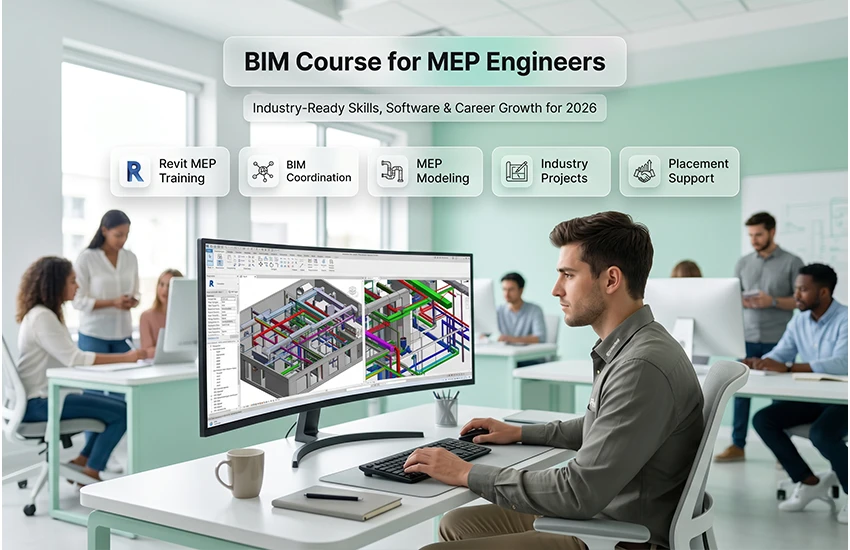
As the construction world undergoes accelerated digital transformation, Building Information Modeling (BIM) is no longer just an additional asset; it has become indispensable for MEP (Mechanical, Electrical, and Plumbing) professionals. While the projects’ complexity increases by the day, a rise in the need for engineers proficient in BIM coordination, clash detection, and optimization of systems has also occurred. Choosing a BIM Course for MEP Engineers in 2026 can pave the way to enhance career development. At Vastulaya, we offer practical job-ready BIM skills through these industry-oriented courses.
Table of Contents
Why BIM matters for MEP Engineers in 2026
In the past, a great number of MEP design jobs still relied on disconnected drawings with much manual coordination. The result is messy as each department sits in different places and people end up chasing design revisions, causing project delays and other issues. BIM changes this by building a centralized digital model where building systems are basically brought together and coordinated in one place. The software discovers conflicts more quickly and easily, helps coordination between disciplines, and minimizes the costly build mistakes that aren’t identified until it’s almost too late.
BIM adoption has jumped a lot, mainly because it supports clash detection, interdisciplinary coordination, and smoother project execution across all stages of construction. Modern MEP professionals are expected to understand BIM workflows and then actually contribute in collaborative project settings, not just “watch” what happens.
If you’re aspiring or already in the field, a specialized BIM MEP Course 2026 provides the structured knowledge and real hands-on experience required to meet the industry expectations without guessing.
Key Skills Covered in a BIM Course for MEP Engineers
A solid BIM Course for MEP Engineers usually covers the technical as well as the hands-on, day-to-day practical activities. The goal is not only to learn software, but it is also to understand why workflows matter in real projects.
- MEP BIM Modeling – One of the main and critical skills that is taught is MEP BIM Modeling. In these courses, engineers learn to build smart 3D models for mechanical, electrical, plumbing, and fire protection systems, not just “pretty geometry” but actual model intelligence.
Key learning practice includes:
- HVAC system modeling
- Electrical distribution systems
- Plumbing network design
- Fire protection system modeling
- Equipment placement and scheduling
At Vastulaya, learners work on practical projects, so the modeling expertise becomes something usable in real-world sites, and it also aligns with what the industry expects.
- BIM Coordination for MEP – Coordination is the most valuable capability in BIM; it is where a lot of the value shows up. Modern construction projects depend heavily on well-coordinated MEP (Mechanical, Electrical, and Plumbing) systems that work seamlessly with architectural and structural designs. Achieving this level of integration requires careful planning, collaboration, and technical expertise. It’s far more complex than simply transferring information from one model to another. Every component must be accurately aligned to ensure efficient project execution, minimize clashes, and support smooth construction and building operations.
A quality BIM program teaches things like:
- Clash detection workflows
- Interdisciplinary coordination
- Model review processes
- Issue tracking and resolution
- Collaborative project delivery
Professionals skilled at BIM Coordination for MEP tend to help with cutting down delays in a project, lessen rework, and generally increase construction efficiency. Today, industry-focused BIM training also depends on coordination as a core skill.
- Building Information Modeling MEP Workflows – Getting a grip on BIM MEP workflows is basically a key part of making the whole project work, so yeah, it really matters.
Students get exposed to:
- BIM execution plans
- Data management (and yes, keeping it coherent matters)
- Project documentation, correctly maintained
- Model-based quantity takeoffs
- Digital project delivery standards
At Vastulaya, there is more focus on understanding the entire BIM project lifecycle, not just learning how to use software commands or click things in a tool. In practice, it feels more connected, if that makes sense.
- BIM Collaboration and Communication – Modern MEP engineers do not work alone; they coordinate with architects, structural engineers, contractors, and project managers. So effective BIM professionals really need to understand how those workflows run in the real world, and how communication actually should happen, not just in theory.
The training covers:
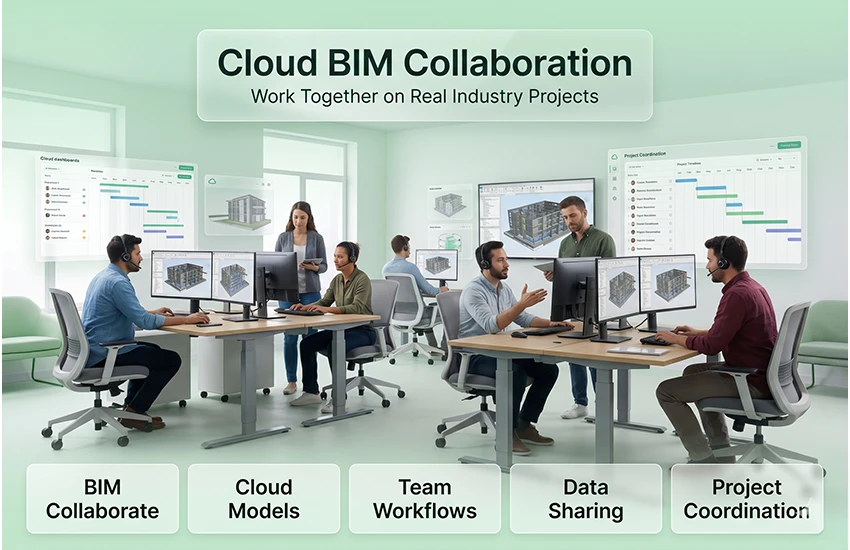
- Cloud-based collaboration
- Model sharing
- Team coordination that stays aligned
- BIM standards compliance
- Documentation management, step by step
These collaborative abilities are becoming more and more important as BIM adoption keeps growing globally, across teams and across regions, even when schedules get tight.
Essential MEP Engineering software, used in BIM
A solid BIM professional is proficient with the BIM industry-standard tools. In practice, modern MEP Engineering Software helps engineers build, analyse, and coordinate building systems more quickly and with less chaos. Here are some of the essential software used by BIM professionals in BIM training:
- Autodesk Revit MEP – Revit would appear to still be the standard for the BIM-focused approach to the design of MEP. It lets you do intelligent modeling, produce documentation, and handle coordination in one place, more or less.
2. Autodesk Navisworks – Navisworks gets used a lot for things. It is widely used for:
- Clash detection
- Model aggregation
- Construction simulation
- Coordination reviews
3. Dynamo – Dynamo helps by letting engineers automate repeatable work so you can gain productivity through visual programming, not just scripting.
As the construction world undergoes accelerated digital transformation, Building Information Modeling (BIM) is no longer just an additional asset; it has become indispensable for MEP (Mechanical, Electrical, and Plumbing) professionals. While the projects’ complexity increases by the day, a rise in the need for engineers proficient in BIM coordination, clash detection, and optimization of systems has also occurred. Choosing a BIM Course for MEP Engineers in 2026 can pave the way to enhance career development. At Vastulaya, we offer practical job-ready BIM skills through these industry-oriented courses.
BIM Collaborate and Cloud Platforms
On the whole, cloud collaboration tools let project teams work together in real time. This improves communication and reduces coordination issues.
In many industries, the BIM programs that matter most often provide training across multiple software platforms. The goal is to make sure professionals are ready for modern project environments, not just one niche workflow.
At Vastulaya, students get practical exposure to current MEP Engineering Software, used by leading AEC organizations worldwide.
Career Scope for MEP Engineers in 2026
So after you finish a BIM MEP course, the options feel pretty broad, and honestly, they keep widening, because digital construction has become like the global norm now.
The jobs for people trained in BIM for MEP Engineers are not just “more available”, they’re also getting more specific, in ways that match real project needs.
Some of the common career options are:
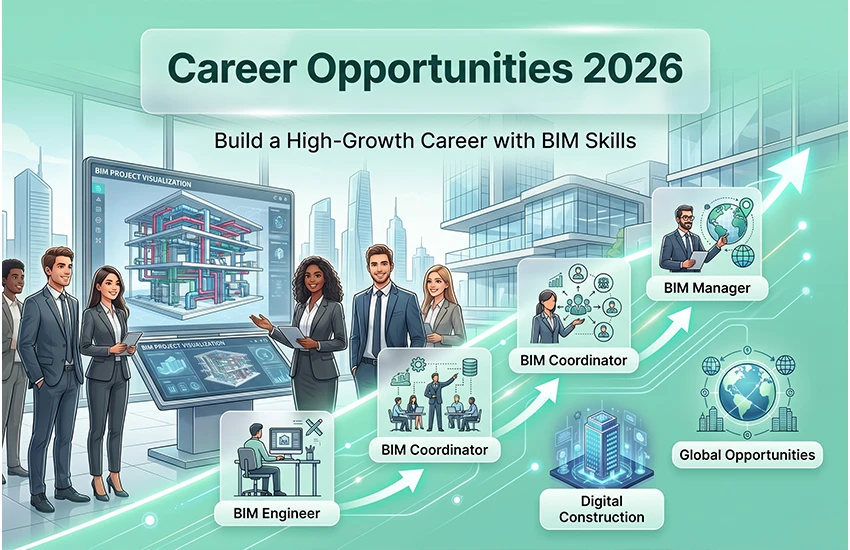
- BIM MEP Engineer – This role is about building and controlling very detailed MEP models across the whole project timeline, so from early planning all the way to handover, not just one single stage, it goes on continuously.
- BIM Coordinator – Through the BIM Coordinator, you coordinate architectural, structural, and MEP disciplines, so everything clicks together and reduces clashes as well, which makes site work calmer.
- BIM Manager – Usually this one focuses on leading BIM rollouts, writing and maintaining standards, and managing how BIM is actually applied during project execution.
- MEP Design Engineer with BIM Expertise – Blending the engineering side plus the BIM workflow side, meaning you apply advanced modeling processes to produce more efficient building systems, not only models for show.
- Digital Construction Specialist – This supports digital delivery, workflow automation, and newer ideas like AI-assisted BIM processes. Sometimes it sounds futuristic, but it’s pretty practical in day-to-day coordination too.
Overall, the industry demand for BIM-skilled professionals is still climbing, especially in infrastructure, commercial buildings, healthcare facilities, and smart city projects. Employers keep leaning toward engineers who can manage BIM modeling, handle coordination and support collaborative delivery.
Why Choose Vastulaya for BIM Training?
Choosing the best training provider can really affect how fast your career grows. Vastulaya gives an industry-focused learning experience, and it’s built for today’s modern MEP professionals.
When joining Vastulaya, learners usually see real benefits like:
- An industry-aligned syllabus, practical project-oriented training, and exposure to real-world BIM workflows, too
- Expert mentorship with advanced software training, plus a career-oriented learning mindset
At Vastulaya, our main purpose is to help engineers develop the technical know-how and practical problem-solving capability that are needed in todays BIM driven construction industry.
Conclusion
The demand for BIM-enabled professionals is accelerating rapidly across the AEC industry. A specialized BIM Course for MEP Engineers gives professionals the essential toolkit for MEP BIM Modeling, BIM Coordination for MEP, better collaborative workflows, and hands-on familiarity with industry-leading MEP Engineering Software.
If you start really mastering Building Information Modeling MEP practices, engineers can unlock high-growth career chances, help deliver complex projects, and remain ahead in this increasingly digital construction environment.
And with comprehensive training, plus practical exposure, and learning that’s clearly industry-focused, Vastulaya helps engineers get set to build a strong BIM career and become future-ready professionals in 2026.
Read More – BIM Course for Civil Engineers in India
Questions People Frequently Ask
-
What is a BIM Course for MEP Engineers?
A BIM Course for MEP Engineers is a specialized training program that shows engineers how to design, build models, coordinate, and manage mechanical, electrical, and plumbing systems using BIM approaches along with common software tools.
-
Who should enroll in the BIM MEP Course 2026?
Mechanical engineers, electrical engineers, plumbing engineers, HVAC professionals, fresh graduates, and even working professionals who want to upgrade their skills can benefit from a BIM MEP Course 2026. If you’re already in the industry and want better coordination or faster workflows, it can fit too.
-
Which software is taught in BIM for MEP Engineers training?
Most BIM programs, including those offered by Vastulaya, usually cover software like Autodesk Revit MEP, Navisworks, Dynamo, and cloud-based collaboration platforms. Sometimes they also touch on model checking and coordination workflows, depending on the curriculum.
-
What are the career opportunities after learning MEP BIM Modeling?
Career options after learning MEP BIM Modeling include BIM MEP Engineer, BIM Coordinator, BIM Manager, MEP Design Engineer, Digital Construction Specialist, and BIM Consultant. You can pick one path depending on what you like, more technical or more overseeing work, but all of these are usually related.
-
Why is BIM Coordination for MEP important?
BIM Coordination for MEP helps spot design clashes early, improves teamwork across disciplines, reduces project delays, and supports smoother construction efficiency overall. So instead of fixing issues late, the project can stay aligned, and the team can move with better clarity.
